Complement System
The complement system, composed of more than 30 serum and cell surface components, is collaborating in recognition and elimination of pathogens as a part of both the innate and acquired immune systems. Once the complement system is activated, a chain of reactions involving proteolysis and assembly occurs, resulting in cleavage of the third complement component (C3). The cascade up to C3 cleavage is called the activation pathway. There are three activation pathways: the classical, lectin, and alternative pathways.
The complement cascade is a dual-edged sword, causing protection against bacterial and viral invasion by promoting phagocytosis and inflammation. Pathologically, complement can cause substantial damage to blood vessels (vasculitis), kidney basement membrane and attached endothelial and epithelial cells (nephritis), joint synovium (arthritis), and erythrocytes (hemolysis) if it is not adequately controlled.
All Product Categories
-
Complement System Inhibitors
(135)
View all products
-
Complement System Agonists
(13)
View all products
-
Complement System Antagonists
(21)
View all products
-
Complement System Activators
(8)
View all products
-
Complement System Modulator
(1)
View all products
-
Complement System Controls
(2)
View all products
-
Complement System Ligands
(3)
View all products
-
Complement System Proteins
(112)
View all products
-
Complement System Related Products (213)
Related Products (213)

-
Recombinant Proteins (112)
-
Antibodies (7)
-
Sutimlimab
 0 ImagesSynonyms: BIVV009; IPN-009; TNT009Sutimlimab is a humanized monoclonal IgG4 antibody. Sutimlimab inhibits complement protein component 1, s subcomponent (C1s). Sutimlimab blocks C3 and C4 activation. Sutimlimab can be used for the research of cold agglutinin disease and complement-mediated hemolytic uremic syndrome.
-
AMY-101 TFA
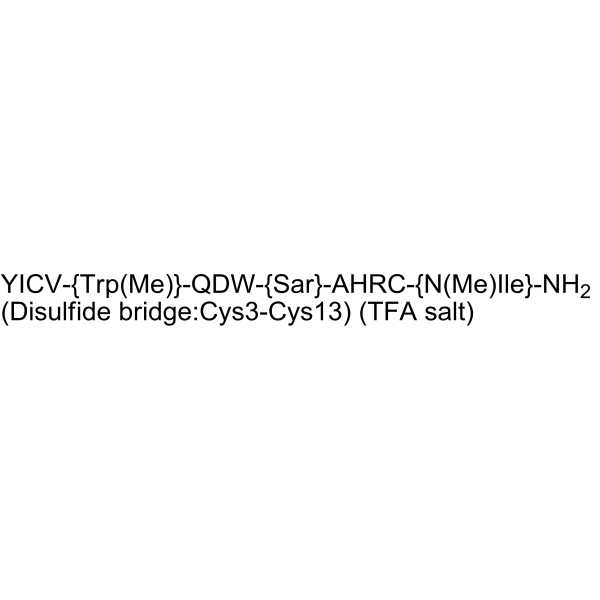 0 ImagesSynonyms: Cp40 TFAAMY-101 TFA (Cp40 TFA), a peptidic inhibitor of the central complement component C3 (KD = 0.5 nM), inhibits naturally occurring periodontitis in non-human primates (NHPs). AMY-101 (Cp40) exhibits a favorable anti-inflammatory activity in models with COVID-19 severe pneumonia with systemic hyper inflammation.
-
Perforin-IN-2
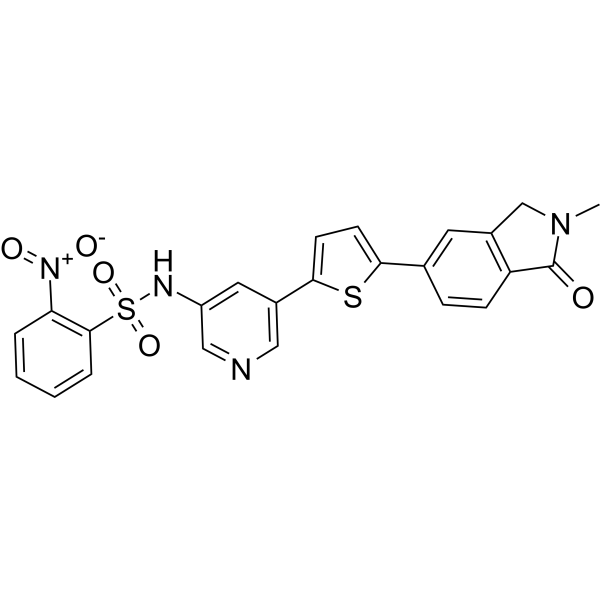 0 ImagesPerforin-IN-2 (Compound 1) is the inhibitor for perforin that inhibits perforin-mediated cell lysis, thereby reducing graft rejection during allogeneic bone marrow/stem cell transplantation.
-
Lipoteichoic acid
 0 ImagesCat. No.: HY-N9481CAS No.: 56411-57-5Lipoteichoic acid is an orally effect anti-inflammatory and antitumor agent. Lipoteichoic acid is a crucial immune molecule in Gram-positive bacteria that activates the complement system by inducing C3 and inhibiting CD55. Lipoteichoic acid regulates macrophage autophagy through the PI3K/Akt/mTOR pathway. Lipoteichoic acid induces lung damage in mice. Lipoteichoic acid inhibits the production of melanin.
-
AMY-101
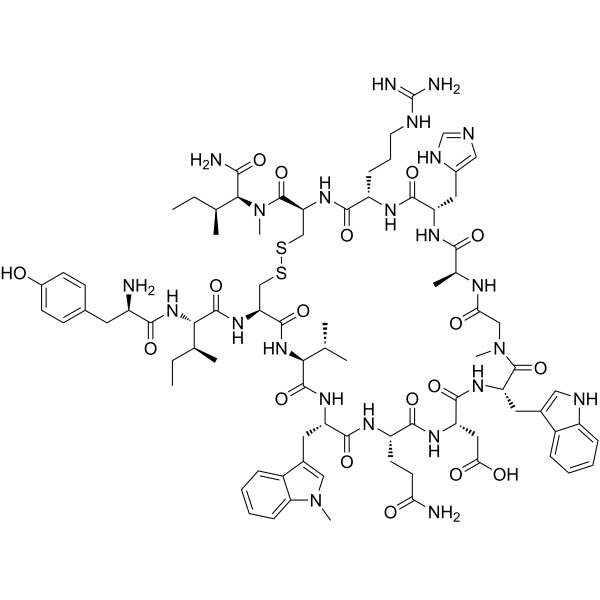 0 ImagesSynonyms: Cp40AMY-101 (Cp40), a peptidic inhibitor of the central complement component C3 (KD = 0.5 nM), inhibits naturally occurring periodontitis in non-human primates (NHPs). AMY-101 (Cp40) exhibits a favorable anti-inflammatory activity in models with COVID-19 severe pneumonia with systemic hyper inflammation.
-
Cobra Venom Factor
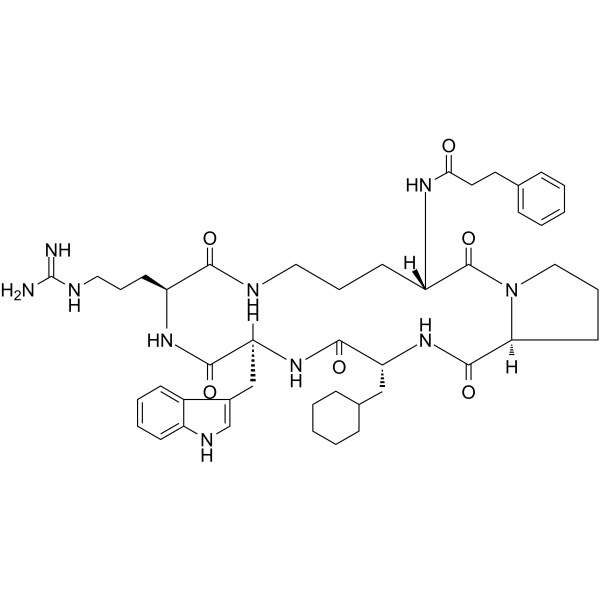
 0 ImagesCat. No.: HY-NP004Synonyms: CVFCobra Venom Factor (CVF) is a selective activator targeting complement components C3, C5, and factor B in the complement system. After binding to factor B, Cobra Venom Factor is cleaved by factor D, forming a stable C3/C5 convertase resistant to regulatory proteins H and I. This continuously hydrolyzes C3 and C5, depleting serum complement while inducing neutrophil migration, vascular leakage, and increased TNF-α levels. Cobra Venom Factor can be used to deplete complement and mimic complement activation-related pathological states, and is applied in animal models of complement-mediated diseases such as acute respiratory distress syndrome (ARDS), sepsis, and shock. Cobra Venom Factor can be isolated from the venom of cobras (e.g., Naja atra, Naja melanoleuca, Naja kaouthia, etc.).
-
Ravulizumab
 0 ImagesCat. No.: HY-P99365CAS No.: 1803171-55-2Synonyms: ALXN1210Ravulizumab (ALXN1210) is a humanized monoclonal antibody that specifically binds with high affinity to the human complement protein C5. Ravulizumab can be used for the research of paroxysmal nocturnal hemoglobinuria, atypical hemolytic uremic syndrome, and myasthenia gravis.
-
Leukadherin-1
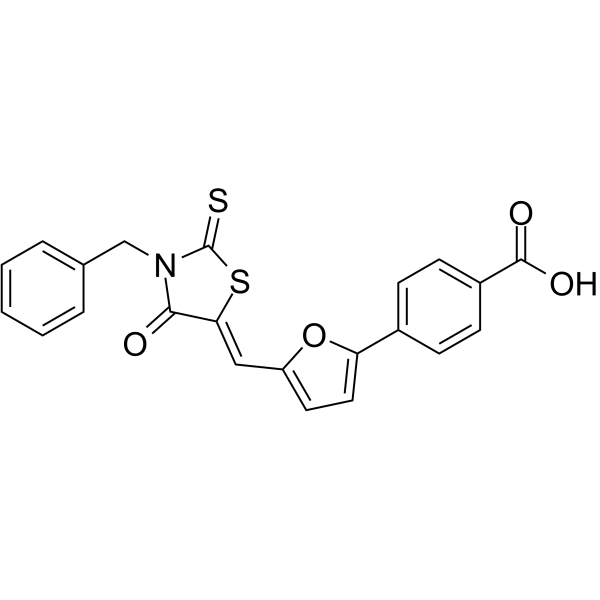 0 ImagesLeukadherin-1, a specific agonist of the leukocyte surface integrin CD11b/CD18, increases CD11b/CD18-dependent cell adhesion to fibrinogen with an EC50 of 4 μM. Leukadherin-1 enhances leukocyte adhesion to ligands (such as ICAM-1) and vascular endothelium and thus reduces leukocyte transendothelial migration and influx to the injury sites. Leukadherin-1 suppresses innate inflammatory signaling.
-
Vesencumab
 0 ImagesSynonyms: MNRP-1685AVesencumab (MNRP-1685A) is IG1 antibody against neuropilin-1 (NRP-1). Vesencumab binds to NRP-1 and prevents the subsequent coupling of NRP-1 to VEGFR-2. Vesencumab has anti-angiogenic and anti-neoplastic activities. Vesencumab can be used in the research of metastatic solid tumors, including ovarian cancer.
-
Dextran sulfate sodium salt (MW 4500-5500)
 0 ImagesCat. No.: HY-116282ACAS No.: 9011-18-1Synonyms: DSS (MW 4500-5500); DXS (MW 4500-5500)Dextran sulfate sodium salt (DSS) (MW 4500-5500) is a polymer of dehydrated glucose with a molecular weight of approximately 4500-5500. Dextran sulfate sodium salt with different molecular weights exhibits different biological activities. Dextran sulfate sodium salt (MW 4500-5500) is an inhibitor of complement and coagulation pathways, and belongs to the glycosaminoglycans (GAG) family. Dextran sulfate sodium salt (MW 4500-5500) acts as an anticoagulant, antiviral, and anti-lipemic agent. Dextran sulfate sodium salt (MW 4500-5500) stops HIV-1 virus adsorption to host cells. Dextran sulfate sodium salt (MW 4500-5500) prevents NK cell-mediated cytotoxicity. Dextran sulfate sodium salt (MW 4500-5500) inhibits instant blood-mediated inflammatory reaction (IBMIR).
-
AMY-101 acetate
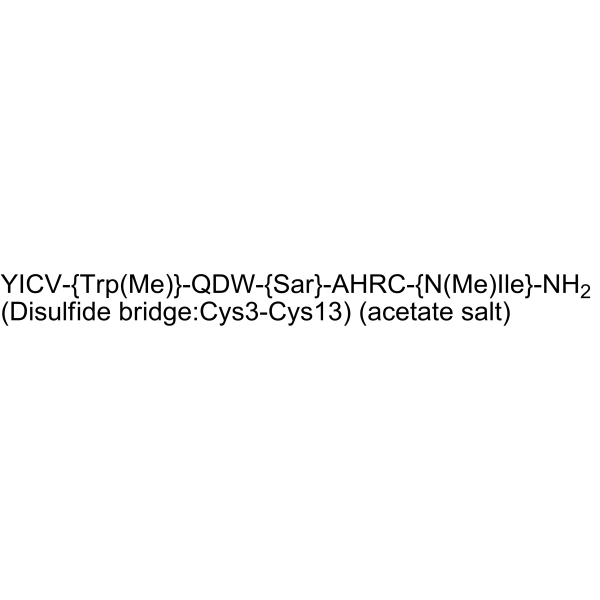 0 ImagesCat. No.: HY-P1717BPurity: 99.93%Synonyms: Cp40 acetateAMY-101 acetate (Cp40 acetate), a peptidic inhibitor of the central complement component C3 (KD = 0.5 nM), inhibits naturally occurring periodontitis in non-human primates (NHPs). AMY-101 acetate (Cp40 acetate) exhibits a favorable anti-inflammatory activity in models with COVID-19 severe pneumonia with systemic hyper inflammation.
-
Crovalimab
 0 ImagesSynonyms: SKY59; RO7112689; RG-6107Crovalimab (SKY59; RO7112689) is a novel humanized antibody against C5 in a pH-dependent manner with KDs of 15.2 nM and 16.8 μM at pH 7.4 and 5.8, respectively. Crovalimab binds human FcRn with great affinity (KD: 17 μM at pH 6.0). Crovalimab can block cleavage of C5 by the C5 convertase and inhibite the activity of a C5 variant (p.Arg885His). Crovalimab inhibits C5b-9 formation significantly in all three complement pathways, the classical pathway (CP), lectin pathway (LP), and alternative pathway (AP). Crovalimab has the potential for paroxysmal nocturnal hemoglobinuria (PNH) and complement-mediated diseases research.
-
Riliprubart
 0 ImagesSynonyms: SAR 445088Riliprubart (SAR 445088) is a selective anti-C1s humanized IgG4 monoclonal antibody with mutations that enhance its binding to the neonatal Fc receptor. Riliprubart blocks activation of the classical complement pathway, prevents the formation of the C3 convertase C4b2a, and inhibits complement-mediated hemolytic activity. Riliprubart can be used in research related to classical complement-mediated diseases, cold agglutinin disease, and chronic inflammatory demyelinating polyneuropathy. For the isotype control of Riliprubart, refer to Human IgG4 (S228P) kappa, Isotype Control (HY-P99003).
-
EG01377 dihydrochloride
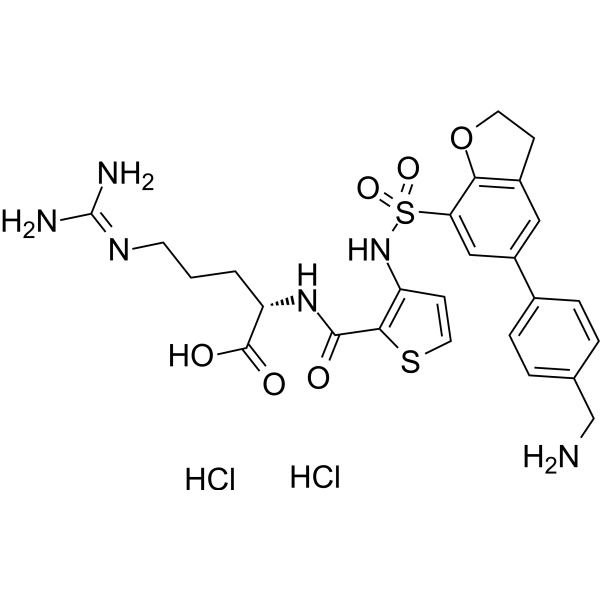 0 ImagesEG01377 dihydrochloride is a potent, bioavailable and selective inhibitor of neuropilin-1 (NRP1), with a Kd of 1.32 μM, and IC50s of 609 nM for both NRP1-a1 and NRP1-b1. EG01377 dihydrochloride has antiangiogenic, antimigratory, and antitumor effects.
-
Dexamethasone (Standard)
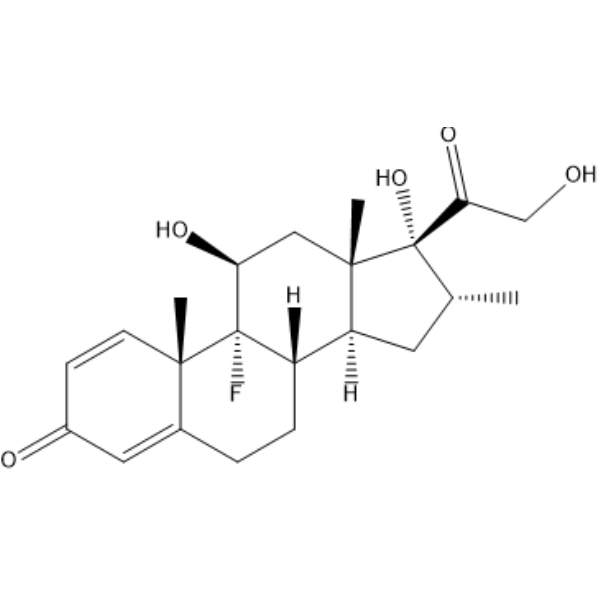 0 ImagesSynonyms: Hexadecadrol(Standard); Prednisolone F (Standard)Dexamethasone (Standard) is the analytical standard of Dexamethasone. This product is intended for research and analytical applications. Dexamethasone (Hexadecadrol) is a glucocorticoid receptor agonist. Dexamethasone also significantly decreases CD11b, CD18, and CD62L expression on neutrophils, and CD11b and CD18 expression on monocytes. Dexamethasone is highly effective in the control of COVID-19 infection. Dexamethasone inhibits production of exosomes containing inflammatory microRNA-155 in lipopolysaccharide-induced macrophage inflammatory responses.
-
Iptacopan hydrochloride
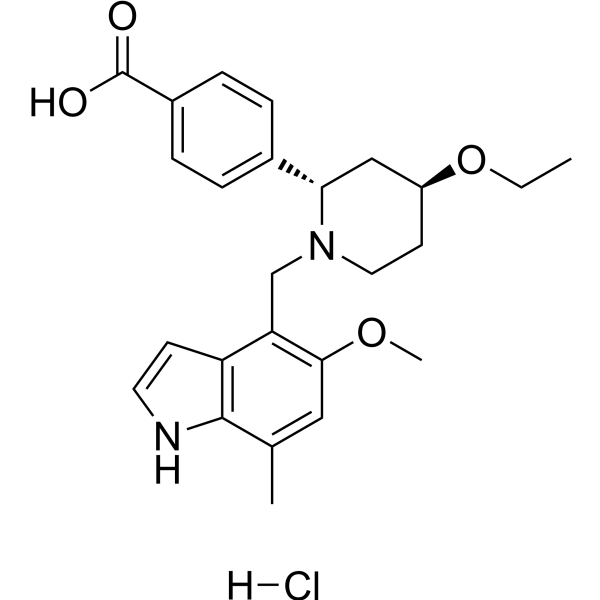 0 ImagesSynonyms: LNP023 hydrochlorideIptacopan (LNP023) hydrochloride is an effective and orally-active highly selective factor B inhibitor with an IC50 value of 10 nM and KD of 7.9 nM. Iptacopan hydrochloride exerts a proximal effect in the complement cascade reaction, preventing the destruction (hemolysis) of red blood cells in PNH and the damage of renal cells in IgAN and C3G. Iptacopan hydrochloride can be used for the study of complement-mediated diseases, particularly paroxysmal nocturnal hemoglobinuria (PNH), primary immunoglobulin A nephropathy (IgAN), and complement 3 glomerulopathy (C3G).
-
Zilucoplan
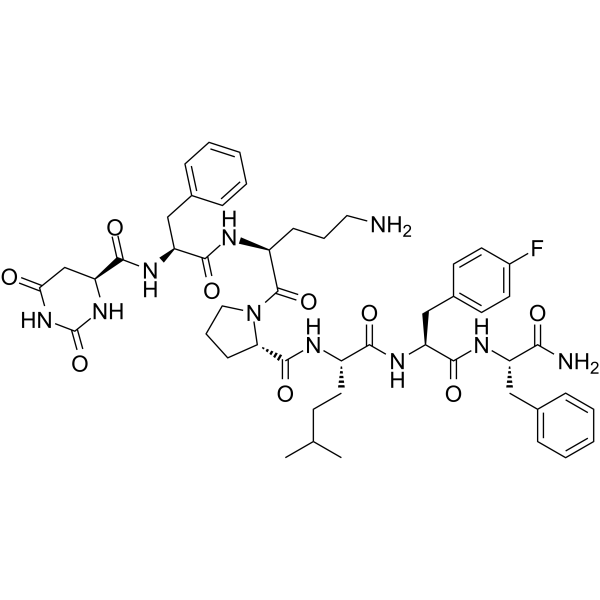
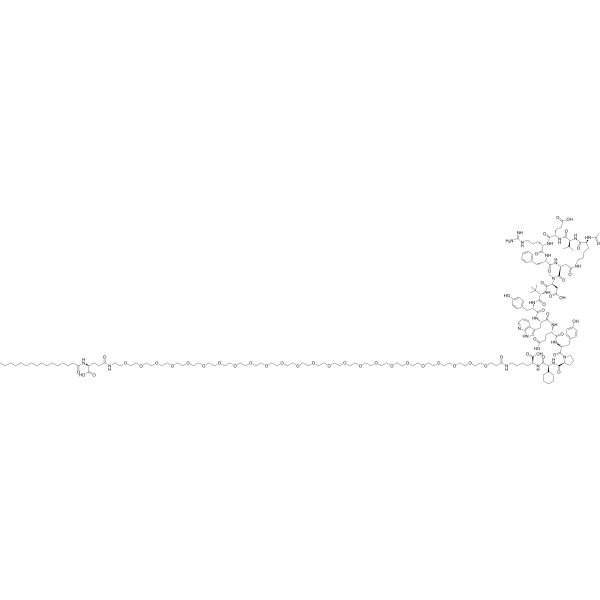 0 ImagesSynonyms: RA101495; RA3193Zilucoplan (RA101495), a 15-amino acid macrocyclic peptide, is a potent complement component 5 (C5) inhibitor. Zilucoplan can be used in research of immune-mediated necrotising myopathy (IMNM).
-
Cyclosporin A (Standard)
 0 ImagesSynonyms: Cyclosporine A (Standard); Ciclosporin A (Standard); CsA (Standard)Cyclosporin A (Standard) (Cyclosporine A (Standard)) is the analytical standard of Cyclosporin A (HY-B0579). This product is intended for research and analytical applications. Cyclosporin A (Cyclosporine A) is an immunosuppressant which binds to the cyclophilin and inhibits phosphatase activity of protein phosphatase 2B (PP2B/calcineurin) with an IC50 of 5 nM. Cyclosporin A is a molecular glue, binds to cyclophilin and calcineurin, leading to inactivation of nuclear Factor of activated T Cells (NFAT) and a subsequent decrease in the immune response. Cyclosporin A also inhibits CD11a/CD18 adhesion.